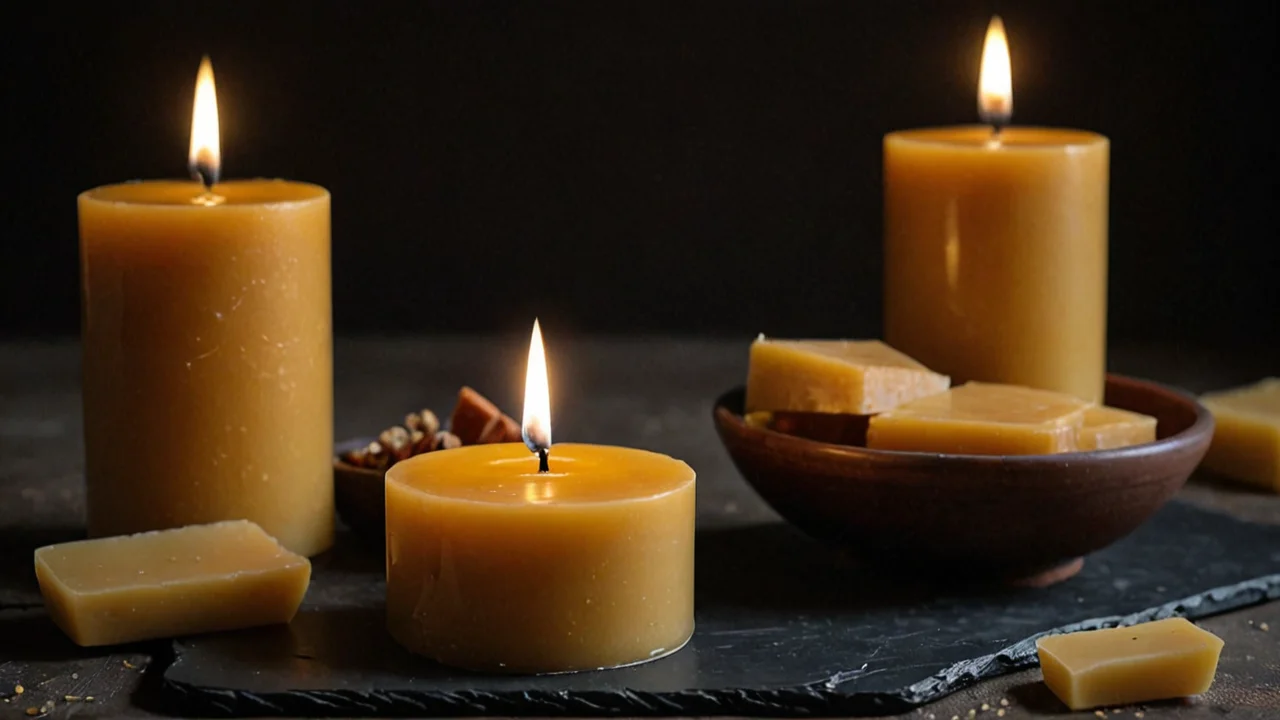
When working with pure beeswax, remember that it has a significantly higher melting point than many commercial paraffin blends, which means you must temper your heat source and monitor for overheating to prevent scorching; never let the melted pool temperature exceed what is appropriate for the specific grade of wax you are using.
Master the Beeswax Melting Process
The single biggest mistake novice candlemakers make when working with beeswax is heating it too aggressively, often believing that faster melting translates to better results. What happens is that you risk scorching the wax and losing the subtle honey notes characteristic of pure beeswax. This scorching creates an unpleasant odor that permeates the entire batch, regardless of how good your fragrance load is.
To correct this, always use a low-heat indirect method—a double boiler setup or a dedicated wax melter—instead of placing the container directly on a high flame or hot plate. Beeswax itself has been documented as having a flash point ≥250 °C (as of 2015-01-06), and while this suggests good heat resistance, managing the melt rate is key to preserving quality.
When mixing beeswax with other ingredients, like fragrance oils, you must account for potential temperature issues. You should always consult a manufacturer's Safety Data Sheet (SDS) for the specific materials, as they detail properties such as flash point—the lowest temperature at which a liquid or wax produces enough vapour to ignite in air in the presence of an ignition source.
The actual melting process requires patience: gently heat the beeswax until it reaches a consistent pool. If you are adding fragrance oils, be mindful that some materials have low flash points; industry guidance warns specifically against using fragrances with a flash point <60 °C because they increase candle fire risk (as of 2024). While beeswax is naturally wonderful, combining it requires respecting these temperature limitations. The proper sequence is always: melt wax first, cool slightly, then introduce fragrance and additives.
Beeswax candlemaking is not inherently hard—it’s mostly about adhering to methodical temperatures and timings. For a complete beginner, the initial required equipment includes a reliable double boiler setup, thermometer, wick/wicking tools, containers, and your beeswax itself. You don't need a massive industrial operation; you just need precise control over heat.
However, simply following a temperature guide isn't enough. If you attempt to rush the cooling phase or use excessive external heat, you risk thermal shock, leading to cracks in the wax surface or uneven crystallization, which ruins the aesthetic and structural integrity of the final product. Always let the wax cool gradually once it reaches the target pour temperature.
Choose Your Ingredients Wisely
The key benefit of using pure beeswax is its natural scent profile—that distinct, mild honey aroma that many consumers prefer over artificial fragrances. Furthermore, beeswax candles tend to burn cleanly and have a high flash point, which speaks to their inherent safety when compared to low-grade waxes.
When considering what you need for candle making, the ingredients are simple: wax (your pure beeswax), a wick appropriate for your container size, and optionally, fragrance/essential oils. If you are wondering if you can use essential oils, the answer is generally yes, but it requires caution regarding concentration and flash point.
From a technical standpoint, while many people ask about using essential oils in candle making, professional guidance dictates that you must always check the specific fragrance flash point. Because some natural extracts can have flash points lower than 60 °C (as of 2024), adding them without proper care increases fire risk. Always prioritize fragrance oils formulated for candles or pure beeswax itself, which has its own safety data sheet listing.
You should always buy a Safety Data Sheet (SDS) for every component—the wax, the wick material, and any added liquid fragrance—because this document provides critical physical and chemical properties, including flash point. If you are starting to plan a candle making business, understanding these sourcing requirements is non-negotiable; it demonstrates due diligence in handling fire safety.
Be aware that beeswax can sometimes be more expensive than paraffin alternatives, which is a trade-off many new businesses must consider when calculating their costs and pricing models. This higher cost of premium wax needs to be weighed against the market demand for natural products. Furthermore, never assume an additive or oil you find online is safe; always verify its flash point.
Develop Your Production Workflow
The most common mistake in development is mixing processes meant for different types of waxes. Because beeswax has a unique chemical composition and high melting points compared to commodity paraffin, the cooling rate and fragrance incorporation must be tailored specifically to it. Do not treat your beeswax like a standard container wax.
When developing your workflow, remember that everything relies on temperature control. You should pre-measure all components—wax, oils, etc.—and heat them together in sequence. The procedure is: melt the bulk of the beeswax slowly over low heat until fully liquid. Once melted, allow it to cool slightly until it reaches the designated pour temperature. At this point, you add your measured fragrance load and stir gently; do not over-stir.
If you are wondering if candle making is hard, understanding the correct sequence makes it manageable. The difficulty lies in precision: maintaining that steady, controlled heat source throughout the melt cycle and then accurately judging when the wax has cooled enough for a perfect pour while still being liquid enough to flow into your molds or containers.
A successful workflow minimizes temperature swings. After pouring the initial batch, allow it undisturbed time to set up fully before attempting to handle or test it. Attempting to speed this cooling process by using drafts or external fans can introduce uneven cooling spots and stress fractures in the wax surface that are difficult, if not impossible, to repair.
Be cautious about container selection too; while some containers work well, others might retain residual heat too long after the candle is complete, which could affect safety or performance. Always verify your chosen vessel's ability to handle the thermal cycling of pure beeswax.
Determine Commercial Viability
Regarding whether candle making is profitable, it depends entirely on mastering the craft and building a strong brand identity around quality ingredients like beeswax. Because beeswax has such a premium natural association, you can successfully price your goods higher than those made with lower-grade waxes; the perceived value of "pure" justifies the cost.
To make this viable, focus on niche markets that appreciate clean burning and natural materials. You are selling more than just light; you are selling an experience linked to safety and purity—a key differentiator in a crowded market space. When starting out, keep your initial overhead low by perfecting one or two reliable scent profiles rather than trying to offer too much variety immediately.
The biggest cost factor besides the wax itself is often the time spent mastering consistency and quality control. A profitable business requires standardized procedures that ensure every single candle performs identically—the wick burns evenly, the melt pool reaches consistently, and the fragrance throw is reliable. If your candles burn unevenly or smoke excessively, customers will notice immediately.
When considering scaling up for profit, remember to account for all regulatory compliance related to fire safety; always maintain documentation showing that your fragrances are safe and do not have a flash point < 60 °C (as of 2024). This due diligence is essential for any commercial endeavor.
Another necessary consideration is waste management. Beeswax, while natural, requires careful handling. Any residue or scraps must be accounted for in your cost calculations and potentially repurposed into tarts or other products to maximize yield and profit margin. Don't just see it as "waste"; view it as a secondary product stream.
Safeguard Your Workspace
The most critical piece of advice for any candle-making venture, regardless of scale, is prioritizing fire safety through material knowledge. You must never treat the process casually; always read and understand the Safety Data Sheet (SDS) provided by your wax supplier for every single product you handle.
Safety isn't just about keeping flames out; it's about understanding what makes things ignite. The flash point is the metric that tells you this critical information—it indicates where liquid vapours will become flammable in the presence of heat. Knowing this allows you to maintain a working temperature range that is both effective and secure.
For example, if your chosen fragrance oil has a flash point significantly lower than 60 °C (as of 2024), it dictates immediate changes to your heating methodology; you must use an extremely low-heat source and avoid open flames near the working area. This is non-negotiable safety protocol.
Furthermore, understand the difference between flash point and autoignition temperature. The flash point is when the vapour can ignite with a spark or flame, but the autoignition temperature shows the higher level at which it will catch fire without any external source—this helps you set safe upper limits on your melter’s thermostat.
Always keep spill kits nearby, and ensure that your workspace has adequate ventilation to dissipate both the wax vapours and any potential burning fragrance compounds. Never leave a working melt bath unattended, even for what seems like a minute. The process of candle making is detailed and requires full concentration at all times, especially when dealing with materials that can reach temperatures like >204 °C (400 °F) flash points reported by paraffin-based wax products.
Troubleshoot the Failures That Beeswax Actually Produces
Beeswax's most common defect is not a fire and not a scent problem — it is adhesion. Beeswax shrinks as it sets and pulls away from glass and metal containers, leaving a pale ring or a gap that lets the wick tunnel and the melt pool run hot against bare glass. You notice it a day after pouring, when the surface has drawn down and a thin crescent of light shows between wax and vessel. Fix it by warming the container before you pour and pouring at a temperature where the wax is still fully liquid but no longer steaming; then cool the filled container slowly and evenly rather than in a cold room or near a window. Wicking a beeswax container with too small a wick because the wax "looks like it should burn cool" is the other half of the same complaint — beeswax needs a larger wick than a paraffin blend in the same jar, and under-wicking produces a tunnel you cannot fix after the fact.
Surface cracks and a dull, cloudy top come from cooling too fast or from pouring too cool. Beeswax has no paraffin's tolerance for being poured thin; if it has started to skin over in the pitcher, the mould or jar will show seams and sinkholes. Repour a top-up layer rather than trying to smooth the first pour with heat, which usually makes the crater worse. Frosting on coloured beeswax is almost always a pigment problem, not a wax problem — natural beeswax takes dye unevenly and shows it as a chalky bloom.
The one failure with a real safety consequence is fragrance. An oil with a flash point below 60 °C should be avoided in candles because it increases fire risk; the standard industry guidance sets that floor, and a low-flash-point oil added to a hot beeswax pool is exactly the scenario it is warning about. Add fragrance after the wax has cooled from melt, stir briefly, and if a supplier's Safety Data Sheet lists a flash point you cannot verify, treat the oil as unsuitable until you can.
Handle and Store Beeswax Without Degrading It
Store beeswax in blocks or pastilles away from light and heat, and expect it to bloom — a whitish, powdery film on the surface is normal and harmless, not mould, and it melts back in. The real enemy is contamination: beeswax picks up the smell of anything stored near it, and a block left beside solvent, paint or strongly scented oils will carry that into every candle you make from it. Keep a dedicated sealed bin.
Do not overheat to save time on remelting. Safety data sheets for candle wax in general report flash points above 200 °C (392 °F) for wax pools without low-flash-point additives, and a manufacturer sheet for candle wax reports a flash point of ≥250 °C with autoflammability around 350 °C — those numbers describe bulk wax, not your melter's hot element, which can run far hotter than the pool and scorch wax on contact. A double boiler or a wax melter with a thermostat keeps the pool well below the ignition end of that range and, more practically, below the point where beeswax darkens and smells burnt.
Filter and re-use scraps, but keep a separate pot for beeswax and never melt it in equipment you also use for paraffin blends without a full clean. Reclaimed wax with wick tabs, soot and dust in it will not take a clean pour, and a batch that has already burned will carry that smell. When you buy, ask for the SDS with the box — not just for the wax but for every fragrance — and file it, because a flash point you can document is the difference between a defensible product and a guess.